#44. Asheville (Saturday, November 17, 2018)
What was your best day…of taking on a role that went beyond what you normally did?
Part 1
Asheville, North Carolina may be one of the best-kept secrets in all of the United States. It’s relatively small (100,000 people) and not a mainstream tourist destination by any measure; but it also has the most microbreweries per capita in the U.S., an active hipster New Orleans-like downtown (except without the shootings) with live music by day and by night, and an enviable geographic location right next to the stunning Blue Ridge Mountains.
But that’s not the main thing I’m in town for. It’s the Southern Finance Association annual conference – my first real academic conference1 (not the CEAs, #44), where I’ll be: (1) presenting Jialong and I’s liquidity paper (#124, #44)2; and (2) discussing a fascinating political economy-financial stability paper by some well-respected Memphis real estate professors. The conference is being held at the historic Omni Grove Park Hotel, basically a sprawling mall/convention complex/hotel nestled right in the mountains.
The entire conference just has this whole legitimate feel to it. I am thrilled to be integrated into the finance research community like this – to actually have relevant projects to talk about with all these professors and upper-year PhD students. Much like #114, what makes it even cooler is that this isn’t even my day job. After all, I’m just a policy guy; in a way, I shouldn’t even be here talking with these serious academics and giving my insights on their work. Yet, that’s exactly where I am right now.
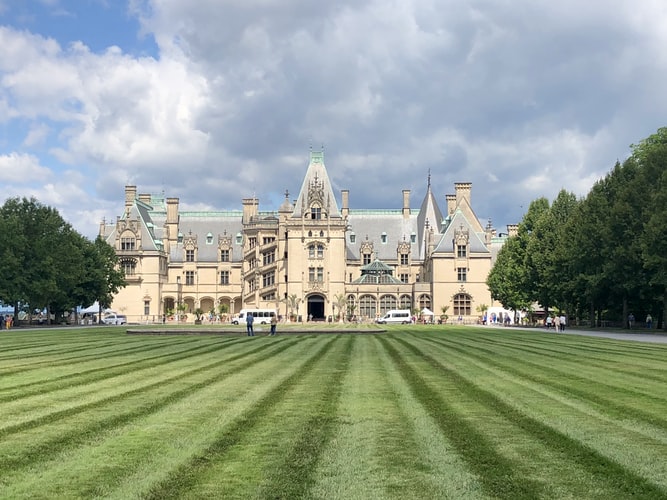
The first night, Thursday, we have dinner at the Biltmore Estate—this fancy mansion complex once owned by the Vanderbilts, following which I spend several hours preparing my discussion presentation.
The next morning, I do my discussion and it goes great. The Memphis guys actually won best empirical paper for their work, but they seem to really appreciate the suggestions that come from my unique policy perspective.
I also make friends in my session with this Fed monetary policy economist, James Keister, and we go for lunch at this hole-in-the-wall Cool Runnings themed Caribbean restaurant. And there, we have that long, engaging discussion about our respective policy roles and research interests—one that further ignites the passion I have for my work and my field.
My presentation on Saturday is well-received by the small audience there, though my discussant (from Spain) couldn’t make it; plus I was in the same session as Matthew Meyer, the only other person from my institution at the conference, so we had to listen to each other’s stuff again. But a successful conclusion to a successful conference nonetheless.
Part 2
Turns out I left all my intelligence, though not my good luck, back in the Omni Grove.
I have the rest of the day to myself before the flight tomorrow morning. So I decide to make a trip to the North Carolina Arboretum3. But I don’t think ahead, and after the Uber drops me off I learn the park is closed to cars after five (it’s three-thirty now). I walk around enjoying the trees for a few hours, then figure I’ll go outside the Arboretum, find a store or something, and call an Uber from there.
Except the area outside the park is all kind of in the middle of nowhere. Starting to worry a little, I finally catch sight of a jogger, explain to her my situation, and she kindly offers to drive me back – right to my hotel. Once we get back, she tells me not to worry: she’s had to do this very thing a number of times before.
For the night, I make the trip to the downtown. My first stop is one of the many famous microbreweries, Wicked Weed. Inside it’s packed. I make it down to the basement/inside-outside courtyard area, and it’s also packed. The whole thing reminds me of that whole beer hall setup, with communal tables and such, that I had thought only existed in Germany. I grab the drink with the craziest-sounding nickname, sit down at one of the tables, and start chatting with the guy next to me.
I end up hitting it off with him and his brother—both working-class guys from Rochester. And we end up spending the next several hours together, going from here to this other basement bar with live music, trying the full range of craft brews that we see. Then to this other place with the greatest sweet potato fries I’ve ever had. They then check out for the night, and I make it to my pre-researched nightclub spot: Scandals.
The place looks like a giant mansion from the outside, and has three levels. At the main level, I get more drinks while the show from the basement makes its way up. It’s a good crowd and the place gives a much grander feel than my go-to Tequila Jack’s spot back home.
The most notable thing about this club is just how friendly everyone is. Several random guys engage me in conversation, which is surprising (but nice) since it’s almost always the other way around. And that just adds to that sincere we’re-all-just-here-to-have-a-good-time feeling that this whole city has given me.
As I’m dancing, a pointed realization suddenly hits me: this is awesome, and this ain’t back home. I’m doing this alone, in the U.S., in freaking Asheville right now!
- Though still a fairly low-tier conference, which is well-known more for its location (here, San Juan, Key West, Orlando) and casualness (there’s a rule there that anybody wearing a tie will have it cut off, no questions asked) than anything else.
- Which has already been put out as a Staff Working Paper, and we’re holding out hope could get into a journal.
- Why not the wider Biltmore Estate or the Blue Ridge Parkway (the big tourist attractions)? This was actually not my first time visiting Asheville; but that’s a story for another day (and another list)…