#174. Mahjong (Friday, June 3, 2011)
What was your best day…of transferring your skills to something completely new?
Heading into the summer after junior year at Waterloo, things had improved substantially academically (#29) and socially (#34), but I still hadn’t solved the main problem that had defined the previous disastrous summer: I had no summer job in my field.
Things were looking bleak when my parents suggested something less conventional: use family connections to arrange a short unpaid internship at a bank in Shanghai, get some relevant experience, spend time with relatives I hadn’t seen in nine years (#67), and gain a different perspective on the world. I jumped at it.
At the bank, in its foreign-business department, I wasn’t asked to do much. I was mostly there to learn Mandarin and finance, so most of the time was spent reading documents and doing small administrative tasks. The most memorable part of the workday was often the commute itself: two Metro lines from my maternal grandparents’ place in Huangpu to the bank in Putuo, packed with commuters, most of whom I stood a head taller than.
Most of the novelty came from Shanghai itself, especially after my mom went home and I was left to explore after work. I was still extremely sheltered, so “exploring” mostly meant wandering mega-malls and Nanjing Road, getting ripped off buying nonfunctional “high-quality” Lost box sets at underground markets, and accidentally finding quiet gardens that I realized too late were make-out spots. Fun, but nowhere near the social or nightlife version of Shanghai I would have chased later.
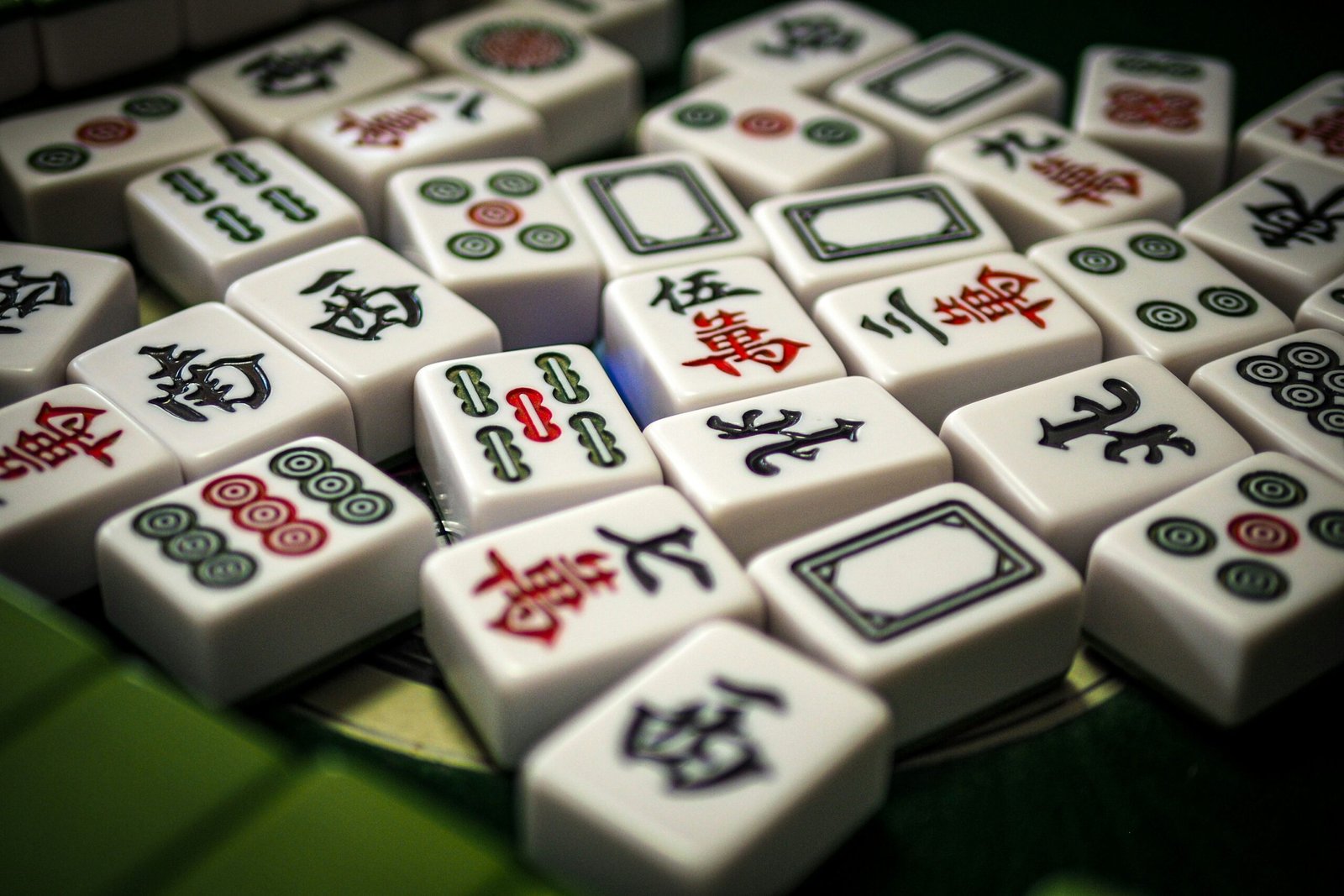
So the real highlight became time with my grandparents—specifically playing, and mostly winning money from them, at their lifelong favorite game: Mahjong. Betting was mandatory, per my grandfather.
This Friday, the day after my mother flies out, I get back late after playing basketball with bank colleagues.1 My aunt immediately asks whether I brought cigarettes; I haven’t, and don’t trust myself to buy the right kind anyway. So the four of us start playing Mahjong.
Side Note: Once a game ends, you sweep all the tiles into the center, press a button, and the hatch opens beneath them. Thirty seconds of rumbling later, four smaller hatches rise with perfectly arranged, freshly randomized walls ready for the next game. I found this machine endlessly fascinating.
The Mahjong seems to continue all weekend, with my uncle and twenty-seven-year-old cousin Zhou Ling rotating in—when my uncle isn’t satisfying his Contra addiction (#41). Our only regular break is two hours each night for a cheesy Chinese drama I’ve somehow become addicted to myself.2
I do surprisingly well by playing conservatively: maximizing my chance of winning each hand instead of chasing the harder, higher-value combinations. My logic is simple: if I win, then at least my grandparents, aunt, uncle, or cousin didn’t. To them, the fact that I—the nephew they had last seen at twelve and who lived in faraway Canada—could sit down and play competitively, let alone win, was genuinely impressive.
To me, I was just transferring the same brute-force strategic reasoning I had spent hundreds of hours using in Magic (#22) and Napoleon (#32). Only now it was working inside a deep-rooted cultural institution I barely knew, during one month when I was stepping back into a family world I hadn’t inhabited in nine years.
- The players were much better than my cousin (#67), and serious NBA fans. This was during the 2011 Finals; nearly all of them were rooting for LeBron and the Heat—“hot fire,” literally, in Chinese.
- Basic plot: Girl meets guy. Girl marries guy. Guy leaves for the U.S. to become rich. Girl is pregnant. Girl raises son with help of crazy mother-in-law. Girl divorces guy. Guy comes back after new wife runs away with all his money. Girl ends up marrying childhood friend who was there all along.