#57. Host Cities (Thursday, June 18, 2026)
What was your best day…of being somewhere just because you knew it would be important?
Note: The most recent entries on this list are ranked fairly conservatively, since it’s too early to know how my perception of them will age.
With each passing year, I have become more conscious of the scarcity of experiences and the fungibility of money. At some point, that became a personal philosophy around sports: I would much rather spend $1,000 to be physically present for something historically important than on something whose scope ends with me (#66). My unusual ability to preserve notable experiences as distinct memories—and my sheer impulsiveness—only reinforces that.
The most emblematic example had to be the 2026 World Cup.
I was not a soccer fan (and never will be, even after this day), but I knew how rare this was: the world’s biggest sporting event coming to Canada, almost certainly for the only time in my life. Whatever it cost, I had to be there.
And I had to do it right. Only Canada games, in Canada.
So I made a west coast vacation out of it: $1,600 for upper-bowl seats to two Vancouver games one week apart, with three nights in Seattle in between.
Vancouver
The morning of the game, I realize everyone will be wearing Canada gear, so I walk down a match-day Granville Street to SportChek and buy an unassuming Canada Soccer hoodie instead of a jersey or T-shirt. I will pay for this decision for the next five hours in thirty-plus-degree heat.
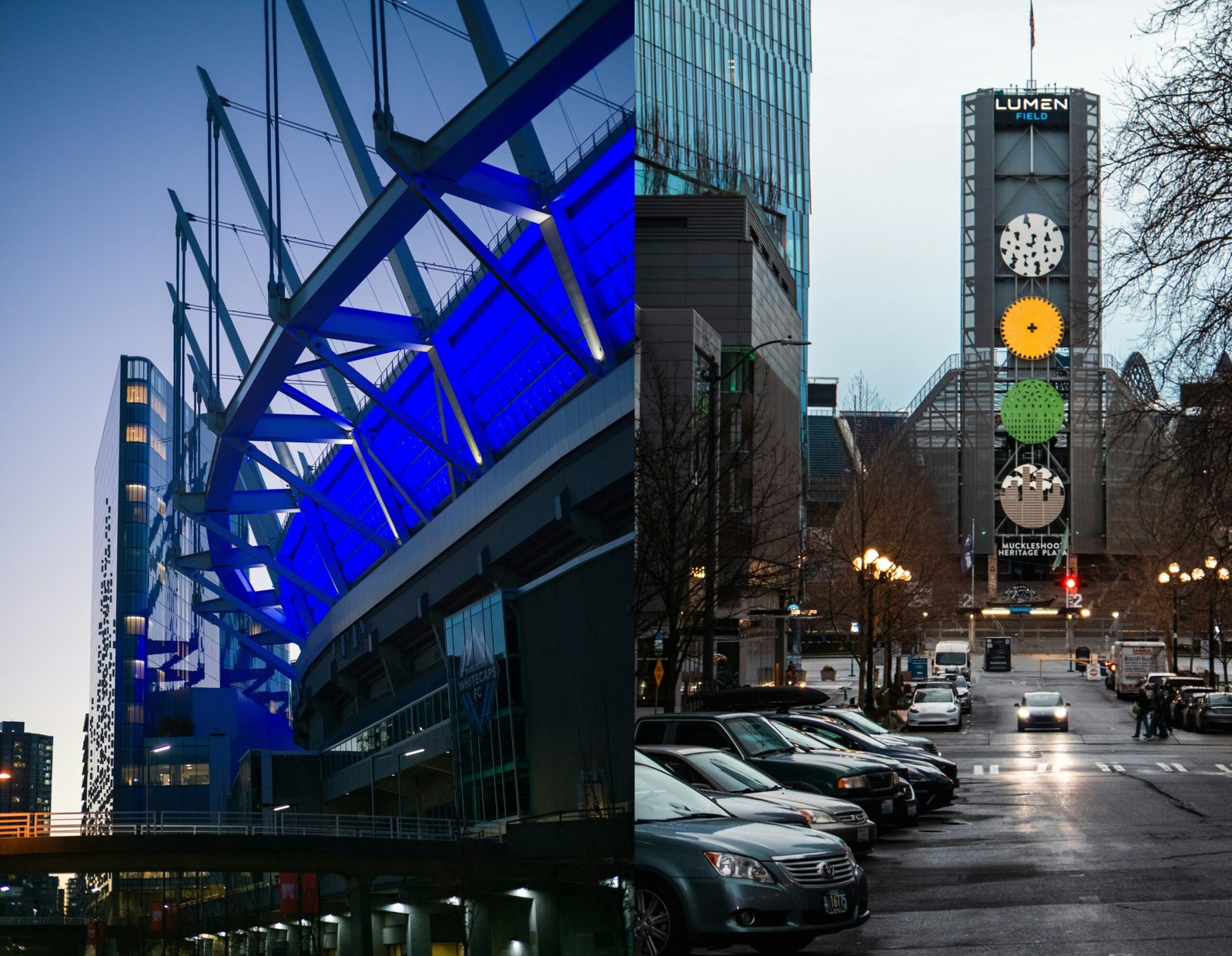
Near BC Place, fervent fans are already gathering for the march to the stadium: chanting, Canadian flags everywhere, red-and-white smoke flares going off. It’s exactly the jubilant chaos I had pictured—a whole country of fans converged in one place for an event that, no matter what happened, would become part of its sporting history. I’m not at all astounded; that was why I made the trip.
And then the Canada versus Qatar game starts. I’m instantly struck by how much more watchable this is than the soccer being played on TV. Even from the nosebleeds, you can see the fluidity of motion, the pure technique behind each delicate handling of the ball—the kind of subtleties that get lost within high-definition pixellated static.
Canada is a moderate favorite, but right away I can tell they’re dominating. They score twice early, then a Qatar player gets sent off before halftime. Yet the simple fact that Canada has never won a World Cup game before—plus some sports trauma from seven months earlier—keeps me irrationally tense long after the outcome should be obvious. Even a second red card1 and a Jonathan David hat trick somehow don’t quite do it.
Then the final whistle goes: Canada 6, Qatar 0, a record-setting first World Cup victory.
Freed from Desire, the random thirty-year-old anthem for this World Cup, starts playing as the players celebrate and the stands continue a party that had effectively begun forty minutes earlier. It feels oddly anticlimactic to me, even as I know exactly what has happened: Canada, a country that a decade earlier could barely imagine qualifying for a World Cup, has just won 6–0 at home and all but secured a place in the knockout round.
That night, after watching Mexico beat South Korea at a Gastown bar, I’m back on Granville Street for the nighttime celebration. The fans from today’s two winning nations are all clustered together in one long, reveling mass, with honking and cymbal-banging and chants in English and French and Spanish cutting through the breezy June evening air. Only at the World Cup. Notably, there are more Mexico jerseys than Canada jerseys.
I go up and down the length of the street, take in the atmosphere, run into a six-foot-eight childhood friend who takes a joint selfie to send to his mom (and thus my mom), then start making my way back to my hotel near the Waterfront.
Because I have to get up early tomorrow for the train to Seattle, where the U.S. will be playing Australia in about twelve hours.
Seattle
No, I did not get tickets for that game.2 But it turned out, the experience outside was just as good.
My train arrives half an hour before noon, and I start walking in the general direction of Lumen Field on this beautiful summer day, as the crowd becomes denser and denser. The three-block radius around the stadium is all filled with U.S. fans. Of course. Based on my experience just yesterday outside BC Place, why wouldn’t I have expected anything else?
And every bar in the area has a giant screen and a growing mass of people watching from the street. I end up outside the Gantry Public House right next to Lumen Field, grab a Seattle dog, and join in fixating at the television as the match just a few hundred meters away is getting underway.
The televisions are delayed by about twenty seconds, so every major play arrives first as a roar from inside Lumen Field and only afterward as visual confirmation on the screens around us. The noise is so overwhelming3, and the stadium so close, that it genuinely feels for a moment like information is reaching me from the future.
For the second half, I squeeze into the giant crowd watching the screen at Pioneer Square, barely able to see it at a thirty-degree angle but happy just to be in the middle of the atmosphere.
The U.S. wins 2–0, clinching a knockout-round spot, and downtown Seattle erupts. Even though this isn’t my country, the atmosphere feels somehow bigger than Vancouver the day before. The chants around me make clear that these fans genuinely believe the U.S. can win the whole thing.4
And that carries a peculiar weight here. Soccer is the world’s dominant sport, yet it remains the one truly global game in which this relentlessly competitive country has never approached the pinnacle. For one afternoon, on home soil, that possibility suddenly feels tangible.5
And with me standing in the condensed six-block center of all that excitement, that is simply another way of being there for history.
- On a reckless challenge that breaks star midfielder Ismael Kone’s leg. It’s a gruesome incident up close, but nobody in the stadium realizes its severity until we all check our phones.
- It would have required a cramped four a.m. bus instead of a relaxed seven a.m. Cascades train—and after the U.S. demolished Paraguay in its opener, the cheapest tickets had doubled to $2,500.
- Lumen Field was especially engineered to maximize crowd volume, and has set multiple decibel-based records in its history.
- I hear many of these chants from fans being interviewed by Fox Sports and ESPN outside Lumen Field. My refusal to join a “USA! USA! USA!” chant costs me a spot on camera.
- The expanded 48-team format helps fuel the optimism: the U.S. opens against two weak opponents, then gets blown out 4–1 by Belgium in the Round of 16.