#100. Grand Prix Montreal (Saturday, March 15, 2014)
What was your best day…of doing well at something, despite not being the best?
Despite having gotten into competitive Magic: The Gathering pretty late and still being fairly casual, I had always been a good player in the Limited formats (i.e. when you use the cards you open then and there, rather than build your own super-powerful decks beforehand, #117). My best performance was at Grand Prix Montreal 2014.
Grand Prix were big open events that were held across the world about 40 times a year. They were huge events: over 2000 people, including a large number of professional players, took part in the main tournament. Back when they were around, each year there’d be about one Limited format Grand Prix within a driving distance from me.
Grand Prix Montreal 2014 was taking place only two weeks after I had moved back to Canada for my job. Perfect. So on this Saturday morning at six, my brother1 and I loaded up into the car for a two-hour drive to Montreal and a full day of Magic.
The Grand Prix was being held on the top floor of the Palais des Congres—this giant convention center in downtown. And at events like this, they don’t mess around. Right at the start, everybody has to go through this complicated, hour-long card-checking process to eliminate any possibility of cheating. Also, the Rules Enforcement Level is “Competitive”, meaning you can get automatic Game Losses/Disqualifications for minor play errors (i.e. the type of things that happen at least a dozen times in a game of casual Magic).
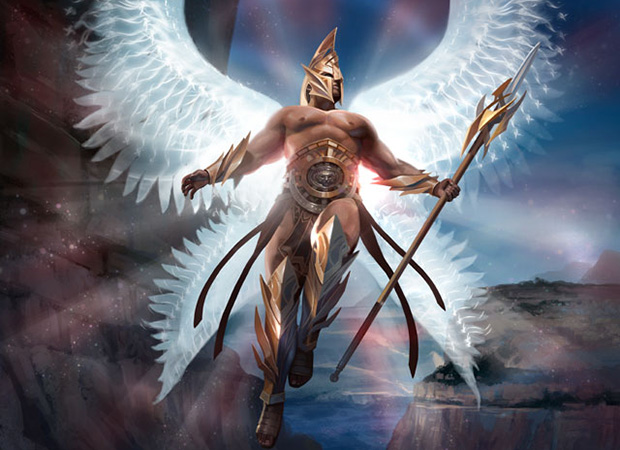
For this event, we used packs from the most recent set of cards: Born of the Gods. I ended up building a green-white deck around my three Akroan Skyguards that I thought was really good. I won my first three best-of-three matches (two against guys from Boston), which got me pretty excited to start. But then I lost the next match that I maybe could have won had I played perfectly, then lost the next match (to a guy who worked at my local store) because I got “mana-screwed”.
For the Grand Prix, the cut-off for Day 2 (which narrowed it down to 200 or so players) was 7-2 or better. So I now had to win my next four matches.
The next match I won in two games against this guy from Quebec City. (I ended it with a powerful card, Fated Retribution, that destroyed everything on his board. His shocked response: “Je ne savais pas que tu avais un Fated Retribution” [I didn’t know you had a Fated Retribution].) The next one I won was against one of those marginal pro players from Madison, Wisconsin2 who had a bunch of byes but had gotten unlucky with the cards he opened. So, I was 5-2 now. Two wins to go—although a massive stomachache had come on (there were no food breaks, and I forgot to bring snacks).
My next round was against this guy named Alex Lam. And he was extremely well-versed in the rules and their nuances3. And as usual for a competitive player, he announced his actions really fast; you really had to try to slow down the game to your own pace, otherwise, if you didn’t respond with the exact right word to any one of them, it was implied that you had taken some game action that you hadn’t intended to take. So that’s basically what happened: I messed up a critical interaction late in the first game, and lost. I then lost the second game, and that was it. (At that point, I was ready to collapse after a full day of extreme mental focus.)
Still, all things considered, 389th out of 1,603 wasn’t so bad.
- Who ended up placing in the middle of the pack, with two wins and three losses, which was pretty good for a fifteen-year-old. (He then did better than me at the Grand Prix in Ottawa later that year.)
- Oddly, the Magic hotspot, with about half the top American pros at the time shared a testing house.
- Magic, as the original trading card game, got developed with a very, very loose set of rules. They cleaned it up in the years since, but the original framework has a lot of unusual legacy aspects that make the rules a very complicated thing to navigate (the Comprehensive Rules is 242 pages long).